Unpacking Perfection: Why 'Leave No Trace' Earned Its 100% Rating
In an era of fractured critical consensus, Debra Granik's quiet masterpiece, 'Leave No Trace,' stands as a testament to the power of empathetic storytelling and unvarnished humanity. Lit-Pop dissects its unimpeachable brilliance.
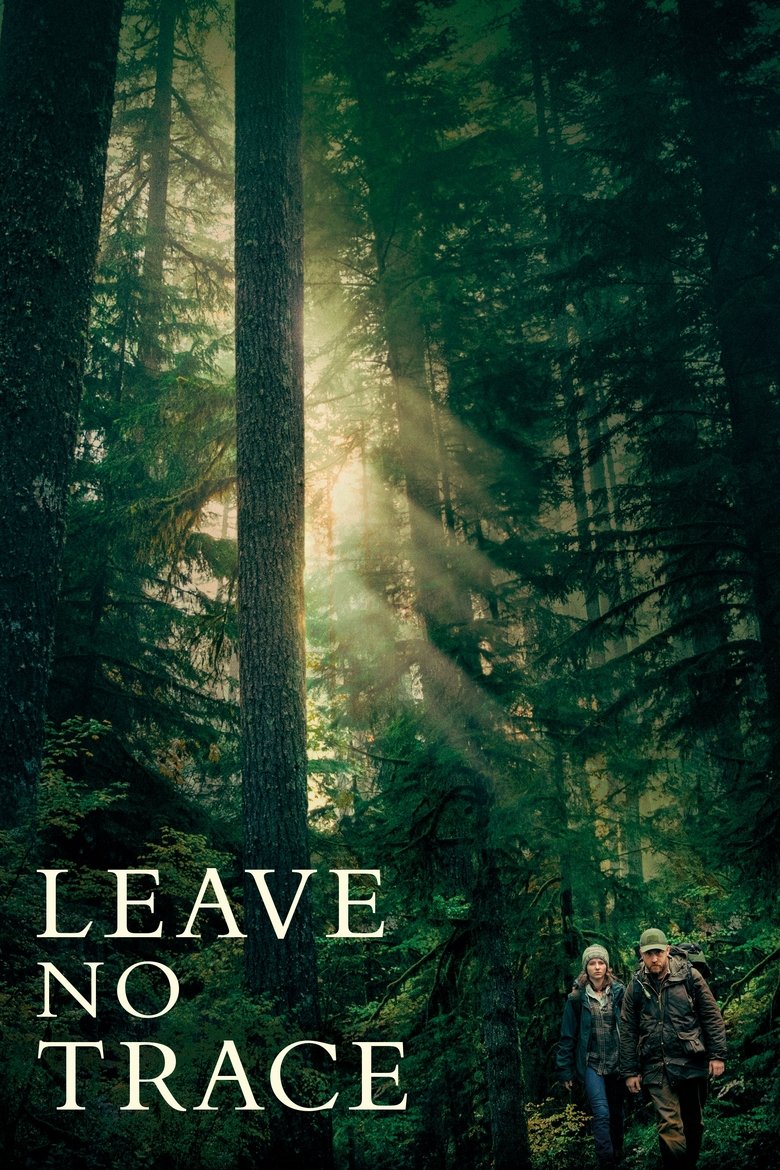
The internet, a vast ocean of perpetually churning opinions, rarely agrees on anything. A perfect score on Rotten Tomatoes, a hallowed 100% Tomatometer, feels less like an achievement and more like a statistical anomaly in our hyper-critical, perpetually polarized landscape. Critics, by nature, are a skeptical bunch, often more eager to dissect flaws than to sing unanimous praises. So, when a film like Debra Granik's Leave No Trace lands in this rarefied air, it's not just a testament to its quality; it's a cinematic event demanding forensic analysis. It's a film that doesn't just pass muster; it transcends it, leaving an indelible mark that resonates long after the credits roll.
Why 'Leave No Trace' is a Perfect Film
For those wondering what alchemy leads to universal critical acclaim, 'Leave No Trace' offers a masterclass. This isn't a blockbuster built on spectacle, nor is it an indie darling relying solely on quirk. It's a profound, understated drama that taps into universal human truths with surgical precision. Here’s what makes it an irrefutable masterpiece:
- Unforgettable Performances: Ben Foster and Thomasin McKenzie deliver career-defining portrayals.
- Granik's Visionary Direction: A subtle, empathetic hand that elevates realism.
- Timeless Themes: Exploring freedom, belonging, and the bonds of family.
- Cultural Relevance: A quiet reflection on societal pressures and alternative lifestyles.
The Silent Symphony of Performance: Foster and McKenzie's Masterclass
At the heart of 'Leave No Trace' lie two performances so raw, so utterly authentic, they feel less like acting and more like pure, unadulterated human experience. Ben Foster as Will, a veteran grappling with unseen trauma by living off-grid with his daughter, Tom, is a revelation. Foster, a consistently brilliant actor often relegated to intense supporting roles, finally gets the canvas he deserves here. His portrayal isn't about grand speeches or dramatic outbursts; it's a symphony of subtle gestures, haunted eyes, and a quiet, almost spiritual determination. You feel his pain, his deep love for Tom, and his desperate need for self-imposed isolation, all without him ever truly articulating it. It’s a performance of profound interiority, a masterclass in showing, not telling.
Equally compelling, if not more so, is Thomasin McKenzie as Tom. Her breakthrough performance is nothing short of extraordinary. As a teenager caught between fierce loyalty to her father and an burgeoning curiosity for the world beyond their wilderness encampment, McKenzie conveys a heartbreaking maturity and resilience. Watch her evolution throughout the film: from a child utterly content in her unconventional existence, to a young woman slowly, gently pulling away, guided by an innate desire for connection and community. The scene where she first experiences the comforts of a 'normal' bed or the simple act of listening to music with other teenagers are moments of quiet revelation, her expressions conveying volumes without a single word. Their dynamic is the film's beating heart, a complex dance of codependency, love, and ultimately, individual growth.
Debra Granik's Unflinching Empathy: A Director's Touch
Debra Granik is not interested in grand pronouncements or cinematic flourishes. Her genius, demonstrated previously in the equally impactful Winter's Bone, lies in her commitment to immersive, naturalistic storytelling. In 'Leave No Trace,' she crafts a world that feels lived-in, not staged. The Pacific Northwest forests are not just a backdrop; they are a character, a sanctuary, and eventually, a cage. Granik's direction is defined by its quiet observation, allowing scenes to breathe, giving her actors the space to inhabit their roles fully. There's no judgment, only an unwavering commitment to portraying the complexities of her characters' choices.
The screenplay, co-written by Granik and Anne Rosellini, is a marvel of economy and depth. It avoids easy answers and simplistic villains. The social workers, the well-meaning strangers, even the legal system, are presented not as antagonists, but as facets of a society trying, imperfectly, to help. This nuanced approach is rare and deeply refreshing. Instead of condemning Will's choices, the film seeks to understand them, to explore the why behind his radical self-reliance and the profound challenges it poses for his daughter. This commitment to empathy, even for characters whose decisions are difficult to reconcile with mainstream norms, is a hallmark of Granik's brilliant craft.
The Enduring Echo of Freedom and Belonging
'Leave No Trace' taps into a primal tension that resonates deeply in modern society: the conflict between absolute freedom and the inherent human need for connection and belonging. Will seeks an unburdened existence, free from the strictures of a society that he feels failed him, or that he can no longer navigate. But as Tom grows, her needs diverge. She desires a home, friends, stability – things her father, for all his love, cannot provide in his chosen lifestyle. The film asks profound questions without ever dictating answers: What does true freedom look like? At what point does self-sufficiency become a form of incarceration? And how do children, like Tom, find their own path when their parents' choices are so profoundly outside the norm?
This isn't a story about 'going rogue' for thrills; it's a poignant exploration of trauma, resilience, and the evolving nature of family. It speaks to a growing cultural fascination with off-grid living, minimalism, and a yearning to escape the relentless pace and demands of contemporary life. Yet, it also reminds us that even in the deepest wilderness, we cannot truly escape our humanity, our need for each other.
A Quiet Rebellion: 'Leave No Trace' in the Cultural Zeitgeist
In a cinematic landscape often dominated by bombast and spectacle, 'Leave No Trace' arrived like a whisper that demanded to be heard. It's a film that eschews easy categorization, blending elements of survival drama, coming-of-age story, and a poignant character study. Its resonance in 2026 is perhaps even stronger, as discussions around mental health, environmentalism, and alternative lifestyles continue to permeate public discourse. The film serves as a mirror, reflecting our own anxieties about societal structures and the search for authentic living.
Compared to other films that tackle similar themes, like the more overtly philosophical and ultimately tragic Captain Fantastic, 'Leave No Trace' offers a grounded, less romanticized view. There’s no grand ideology being espoused, just the day-to-day struggle of two people trying to survive and navigate their complex relationship. It’s this unflinching realism, devoid of sentimentality, that elevates it beyond a mere narrative and into the realm of timeless art. It’s a film that trusts its audience to engage with its complexities, to sit with its silences, and to grapple with its challenging questions. This is why it remains a topic of discussion even years after its release, a true testament to its lasting impact.
Editor's Verdict
'Leave No Trace' is not just a perfectly rated film; it's a perfectly made film. It's an understated triumph of empathetic storytelling, powered by two of the most quietly devastating performances you'll ever witness, all orchestrated by a directorial hand that understands humanity with profound depth. Go watch it. Like this post if you agree that true perfection lies in quiet profundity.
FAQ
What is 'Leave No Trace' about?
'Leave No Trace' tells the story of Will, a military veteran suffering from PTSD, and his teenage daughter, Tom, who live an off-grid existence in the forests of Oregon until a small mistake leads to their discovery and forces them to confront society.
Who directed 'Leave No Trace'?
The critically acclaimed film 'Leave No Trace' was directed by Debra Granik, known for her naturalistic storytelling and for previously directing the Oscar-nominated 'Winter's Bone'.
Is 'Leave No Trace' based on a true story?
While the film is fictional, it is adapted from Peter Rock's novel 'My Abandonment,' which was inspired by a true story of a father and daughter living hidden in an Oregon park for years before being discovered.