Yann Martel's 'Son of Nobody': A Myth for Our Fractured Age?
After 'Life of Pi,' Martel attempts to forge a new mythology. Does 'Son of Nobody' soar into the literary firmament, or does its ambition prove a narrative albatross?
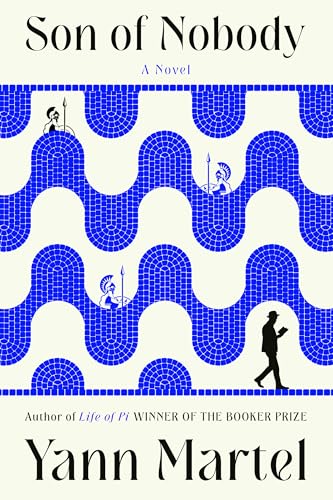
In an era saturated with reboots, remakes, and endless IP extensions, the notion of a contemporary author daring to forge a new mythology feels almost revolutionary. Yann Martel, the Booker Prize-winning architect of the indelible Life of Pi, returns with Son of Nobody, a novel that promises to wrestle with creation, purpose, and the very fabric of existence. The question isn't whether Martel has the audacity; it's whether he has the alchemy. Does this gargantuan undertaking transcend its own sprawling ambitions, or does it buckle under the weight of its profound aspirations? Lit-Pop isn't here for polite applause; we're here to dissect.

Decoding Yann Martel's "Son of Nobody": Beyond the Pi
Martel's latest offering is hardly a quiet return. It's a seismic event, a literary earthquake attempting to reconfigure our understanding of origin stories. Here’s what makes Son of Nobody a necessary (and sometimes frustrating) deep dive:
- The Unapologetic Grandeur of a New Mythos: Martel dives headfirst into constructing an intricate, multi-layered cosmic narrative that feels both ancient and alarmingly contemporary.
- Philosophical Interrogations on Identity and Belief: Like his previous works,
Son of Nobodyis less a story about something and more a story through which profound existential questions are relentlessly posed. - Martel's Distinctive Narrative Craft: We examine the signature blend of lush prose, meta-fiction, and allegorical resonance that defines his literary DNA.
- Cultural Resonances and Modern Storytelling: How does a novel of this scale, steeped in foundational myths, speak to our increasingly fragmented and skeptical world in April 2026?
The Labyrinthine Tapestry: Weaving a New Origin Story
Son of Nobody is not a book one simply reads; it's a world one endeavors to navigate. Martel, with characteristic daring, sidesteps conventional narrative structures to present a sprawling, millennia-spanning saga that posits a completely novel creation myth. From the nascent stirrings of cosmic consciousness to the bewildering complexity of human civilization, the book attempts nothing less than an alternative genesis. This isn't just a story set in a mythical world; it's a story creating one. We're introduced to a pantheon of emergent entities, primordial forces, and the slow, often agonizing, birth of self-awareness. The initial chapters are a dizzying, exhilarating plunge into a meticulously imagined cosmology, a testament to Martel's boundless imagination. He avoids the easy trap of simply rehashing existing myths, instead opting for a truly original, if sometimes unwieldy, construct. However, the sheer density of this new lore occasionally verges on overwhelming, threatening to alienate readers who crave a more immediate narrative hook. It demands patience, a willingness to surrender to its peculiar rhythms, and an almost academic dedication to understanding its internal logic. This isn't a weekend read; it's a project.
Philosophical Depths: The Weight of Existence and Narrative
If Life of Pi explored faith through the lens of survival and storytelling, Son of Nobody broadens its scope to encompass the very purpose of being. Martel's characters, whether primordial beings or their human descendants, are perpetually grappling with profound existential questions: What defines identity when one is an extension of a greater cosmic force? How do we construct meaning in a universe that seems indifferent to our struggles? The novel relentlessly probes the nature of belief, not just in a divine sense, but in the narratives we construct for ourselves and our societies. The book often feels like a philosophical treatise disguised as a grand epic, a bold move that will undoubtedly divide readers. For those who relish intellectual sparring and the discomfort of unchallenged assumptions, Son of Nobody is a banquet. Martel doesn't offer easy answers; he offers more questions, beautifully phrased and tragically resonant. This thematic density elevates it far beyond mere speculative fiction, positioning it as a work of profound literary ambition that belongs in conversation with works that challenge our fundamental understanding of reality, much like the genre-bending narratives we explored in Genre is Dead: The Books You NEED Defy All Labels.
Martel's Craft: Prose as a Philosophical Instrument
Martel's prose, as always, is a thing of remarkable beauty and precision. He possesses a unique ability to render the utterly fantastical with a grounded, almost journalistic clarity, making the esoteric feel tangible. In Son of Nobody, this skill is deployed to its fullest, painting vivid landscapes of nascent worlds and internal struggles of burgeoning consciousness. His sentences often ripple with allegorical weight, each metaphor carefully chosen to resonate with the larger philosophical themes. There are moments of breathtaking lyricality, passages that sing with the cosmic grandeur Martel is striving for. However, the sheer volume of this intricate prose, while impressive, can sometimes feel relentless. Unlike the compelling, forward-driving narrative of Pi's journey, Son of Nobody occasionally sacrifices momentum for contemplation, leading to stretches where the reader might yearn for a simpler, more direct path. The characters, too, while embodying profound ideas, sometimes feel more like philosophical constructs than fully fleshed-out individuals, serving as vessels for Martel's grand inquiry rather than living, breathing entities. This isn't necessarily a flaw, but a deliberate choice that demands a particular kind of reader – one less concerned with psychological realism and more invested in the allegorical journey.
Cultural Resonance: A Timely Meditation on Fragmentation
In April 2026, Son of Nobody arrives at a cultural moment defined by fragmented narratives, ideological polarization, and a desperate search for unifying truths. Martel's ambitious creation myth, with its exploration of how disparate elements coalesce (or fail to coalesce) into a coherent whole, feels remarkably prescient. The book implicitly questions the power of foundational stories in a post-truth world, asking if humanity can ever truly agree on an origin, or if our individual narratives are destined to remain irreconcilable. It's a literary equivalent of trying to stitch together a coherent tapestry from a thousand different threads, each insisting on its own unique color and pattern. While some might find its epic scope daunting, its underlying interrogation of how meaning is made and sustained in a chaotic universe resonates deeply with contemporary anxieties. It forces us to confront our own constructed realities, much like the challenging literary works discussed in The Unflinching Gaze: Why We Crave Literary Discomfort. This isn't escapism; it's an intellectual challenge designed to make you think, to make you question, and ultimately, to make you work for every single insight it offers.
Editor's Verdict
Rating: 7/10
Son of Nobody is a monumental achievement in scope and ambition, a dazzling display of intellectual daring that solidifies Martel's place as a singular voice in contemporary literature. While its sheer density and philosophical leanings occasionally weigh down the narrative, it's a vital, challenging work that demands engagement and rewards patient readers with profound insights into the nature of existence and storytelling. It's not Life of Pi, but it's an essential, brave new beast all its own. Like this post if you're ready to wrestle with a truly ambitious novel! We want your takes to reverberate, not just echo. Let us know if Martel's latest masterpiece grabbed you, or if it left you adrift in its cosmic currents. We thrive on the debate.
FAQ
What is 'Son of Nobody' about?
'Son of Nobody' by Yann Martel is a philosophical novel that constructs an entirely new creation myth, exploring themes of identity, belief, and the fundamental nature of existence through a sprawling, multi-layered narrative.
How does 'Son of Nobody' compare to 'Life of Pi'?
While both novels share Martel's signature philosophical depth and allegorical style, 'Son of Nobody' is more ambitious in scope, creating an entirely new mythology rather than retelling a familiar one. It's less a straightforward adventure and more an intellectual exploration of cosmic origins.
Is 'Son of Nobody' a challenging read?
Yes, 'Son of Nobody' is considered a challenging read due to its complex mythological framework, philosophical density, and often non-linear narrative. It requires patience and a willingness to engage deeply with its intellectual themes.