Don't Laugh: Why Mr Happy is Your 2026 Must-Read
Amidst literary giants, a children's classic offers subversive truths about corporate life and the relentless pursuit of 'happiness.'
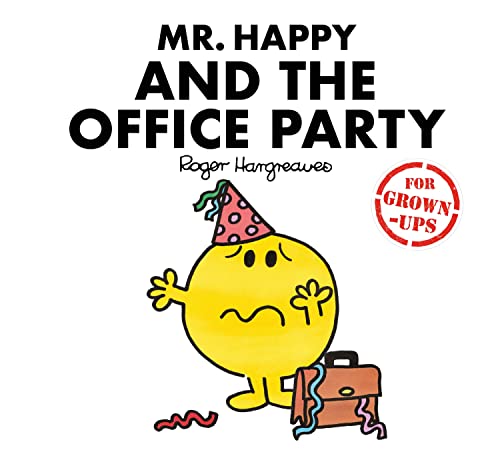
Every March, the literary world churns with predictions, touting weighty novels and groundbreaking non-fiction as the "must-reads" of the year. We're told to dive into complex narratives, challenging prose, and titles that promise to fundamentally shift our worldview. But what if I told you the most unexpectedly vital book for your 2026 reading list isn't a Booker long-lister or a Pulitzer contender, but a seemingly innocuous children's book? Yes, I'm talking about Mr Happy & The Office Party by Roger Hargreaves and team. Before you scoff, hear me out. This isn't just about childhood nostalgia; it's about a shockingly relevant cultural commentary hiding in plain sight.
Why Mr Happy is the Unsung Hero of 2026's Book List
While the algorithm pushes weighty historical fiction and gritty thrillers, a truly profound read might be slipping under your radar. Here’s why this seemingly simple tale deserves a deeper look:
- A Mirror to Modern Corporate Absurdity: It dissects the performative joy of the workplace.
- The Tyranny of Toxic Positivity: It subtly critiques the pressure to always be 'on'.
- Therapeutic Simplicity: A refreshing antidote to overcomplicated narratives.

The Consensus: A Simple Children's Story
Let's be clear: on the surface, Mr Happy & The Office Party is a children's book. It's adorned with cheerful illustrations and a straightforward narrative. The popular view, and indeed the intended view, is that it's a lighthearted tale designed to entertain young minds, perhaps teach a simple lesson about emotions or social situations. It's a relic of a bygone era of innocent storytelling, a sweet diversion, nothing more. Many would argue its inclusion in a list of "essential reads" for adults in 2026 is either a joke or a serious misjudgment, especially when compared to the demanding literary works everyone is actually talking about.
My Take: A Subversive Masterpiece for Jaded Adults
But that's precisely where everyone misses the point. In a world drowning in self-help gurus, corporate speak about "synergy" and "mindfulness workshops" that feel anything but mindful, Mr Happy & The Office Party emerges as a brilliant, if accidental, piece of social commentary. Mr. Happy, in his relentless, almost pathological cheerfulness, navigating the bizarre social dynamics of an "office party," becomes a tragicomic figure representing the modern employee. We're all Mr. Happy, forced to paste on a smile, engage in forced banter, and pretend to enjoy lukewarm punch, all while the existential dread of Mondays looms. It's a stark, simple portrayal of the performative joy and toxic positivity demanded by many workplaces. When compared to the navel-gazing of some contemporary literary fiction, this book offers a sharp, almost cynical, mirror to our collective adult anxieties.
The genius lies in its unadorned simplicity. There's no convoluted plot, no overwrought metaphors – just a man (or Mr. Man) trying to maintain his persona amidst forced merriment. This isn't just a book for children; it's a profound, if unintended, satire about adulthood. It encourages us to question the pervasive culture of enforced happiness and the often-absurd rituals of professional life. For more on how books can challenge our perceptions, consider reading Shelf Revolution: Ditch Trends, Embrace Provocation – it champions exactly this kind of unconventional engagement.
Why My Take is Better
While the straightforward interpretation of Mr Happy & The Office Party as a harmless children's book is correct on a literal level, it's a shallow reading that overlooks its profound sociological resonance. My take elevates it from a mere novelty to a surprisingly incisive critique. It pushes readers to see beyond genre boundaries and find unexpected depth in the mundane. In a landscape saturated with books that try too hard to be profound, this little book achieves it almost effortlessly through its very innocence. It's a powerful reminder that sometimes the most cutting observations come from the simplest sources, offering a refreshing counter-narrative to the endless stream of earnest but ultimately forgettable "important" books. If you're tired of the literary echo chamber, it's time to seek out books that genuinely surprise, much like how we explored Unearthing Backlist Book Gems: Your Next Obsession Awaits.
Editor's Verdict
This isn't just a nostalgic trip; it's a necessary, darkly humorous interrogation of our adult lives. Don't be a Mr. Grumpy – embrace the unexpected wisdom of Mr. Happy.
Editor's Rating: 8/10
FAQ
Who is Mr Happy?
Mr Happy is a character from the Mr. Men series of children's books created by Roger Hargreaves, known for his perpetually cheerful disposition.
What is 'Mr Happy & The Office Party' about?
It's a children's story where Mr Happy attends an office party, navigating social interactions and maintaining his cheerful demeanor in a typically adult setting.
Why is this book considered relevant for adults in 2026?
Beyond its surface as a children's book, its depiction of enforced cheerfulness and social rituals at an office party offers a witty, if unintentional, commentary on modern workplace culture and the pressure for toxic positivity.