Decoding the Cosmos: Essential Sci-Fi Books of All Time
From groundbreaking classics that shaped our understanding of the future to modern adventures that keep the genre vibrant, join us on a journey through the most impactful science fiction narratives.
Ever wondered which books truly built the bedrock of science fiction, shaping our imagination and challenging our perceptions of humanity, technology, and the universe itself? Science fiction isn't just about spaceships and aliens; it's a powerful lens through which we explore societal issues, philosophical dilemmas, and the boundless possibilities of tomorrow. Today, Lit-Pop is diving deep into the literary wormhole to uncover the most essential science fiction books of all time—the groundbreaking classics and even some modern entries that continue to define and evolve this incredible genre.
The Foundations: Pioneers of Speculative Fiction
Science fiction, as we know it, didn't just appear fully formed. It evolved from earlier speculative and gothic tales, with certain authors planting the seeds for what would become a literary powerhouse. These foundational texts didn't just tell stories; they invented entire concepts and subgenres that still resonate today.
Mary Shelley's 'Frankenstein': The Birth of a Genre
Considered by many to be the very first science fiction novel, Frankenstein; or, The Modern Prometheus by Mary Shelley, published in 1818, is far more than a gothic horror story. It's a profound exploration of scientific ambition, the ethics of creation, and the responsibility of a creator to their creation. Shelley, barely 19 when she conceived the idea, crafted a narrative that asks timeless questions about what it means to be human, the dangers of playing God, and the societal rejection of the 'other.' Its impact on literature and our collective consciousness about scientific progress is immeasurable.
H.G. Wells and Jules Verne: Visionaries of the Future
No discussion of essential sci-fi is complete without acknowledging the towering figures of H.G. Wells and Jules Verne. Verne, with works like Twenty Thousand Leagues Under the Seas and Journey to the Center of the Earth, thrilled readers with adventurous tales of exploration, showcasing technological marvels that were audacious for their time. Wells, on the other hand, often delved into more dystopian and philosophical territory. His The War of the Worlds introduced alien invasion narratives, while The Time Machine popularized time travel and explored themes of class division and evolutionary futures. These authors laid the groundwork for countless sci-fi tropes and continue to inspire.
Golden Age Giants: Shaping the Modern Sci-Fi Landscape
The mid-20th century saw science fiction flourish, with authors building on the foundations laid by their predecessors, pushing the boundaries of imagination and philosophical inquiry.
Isaac Asimov's 'Foundation' Series: Galactic Empires and Psychohistory
Isaac Asimov's Foundation series is a monumental achievement in speculative fiction. Beginning in the 1940s, this saga introduced the concept of 'psychohistory,' a mathematical science that can predict the future of vast populations. Asimov explored the rise and fall of galactic empires, the nature of knowledge, and the enduring struggle to preserve civilization. His 'Three Laws of Robotics,' introduced in other works, also became a cornerstone for discussions about artificial intelligence and ethical programming, influencing countless stories and real-world debates.
Robert Heinlein's 'Stranger in a Strange Land': Martian Messiahs and Social Commentary
Robert Heinlein was a master of hard science fiction, but his 1961 novel Stranger in a Strange Land stands out for its profound social and philosophical impact. It tells the story of Valentine Michael Smith, a human raised on Mars who returns to Earth and struggles to understand human culture. The book challenged conventional notions of religion, love, sexuality, and patriotism, sparking intense discussion and becoming a counter-culture phenomenon. Its influence on the free love movement and its exploration of what it means to be 'grok' (to understand completely) are legendary.
New Wave and Beyond: Expanding the Genre's Horizons
As the world changed, so did science fiction. The 'New Wave' of the 1960s and 70s brought a focus on literary style, character depth, and social relevance, moving beyond purely technological speculation.
Ursula K. Le Guin's 'The Left Hand of Darkness': Gender, Society, and Empathy
Ursula K. Le Guin's 1969 masterpiece, The Left Hand of Darkness, is a seminal work of feminist science fiction and a landmark in speculative anthropology. Set on a planet where inhabitants are ambisexual, capable of changing gender, the novel brilliantly explores themes of gender identity, societal structures, political systems, and communication across cultures. Le Guin's elegant prose and deep philosophical insights make this a truly essential read that continues to challenge readers to reconsider their own assumptions about identity and society.
Philip K. Dick: Reality, Identity, and the Human Condition
While many of Philip K. Dick's works have been adapted into iconic films, his novels are essential reading to understand the core of his genius. Books like Do Androids Dream of Electric Sheep? (the basis for Blade Runner) and Ubik delve into questions of reality, perception, identity, and what truly constitutes humanity in an increasingly technological world. Dick's often paranoid and surreal narratives blur the lines between what's real and what's simulated, leaving readers questioning their own existence.
The Evolving Landscape: Sci-Fi for All Ages
Science fiction continues to evolve, embracing new voices and reaching diverse audiences. While we celebrate the literary heavyweights, it's also important to acknowledge how the genre continues to capture imaginations across all age groups, bringing its core themes to new generations.
For instance, while a book like The Thursday Murder Club provides a delightful, cozy mystery, and Inferno by Dan Brown keeps thriller fans on the edge of their seats, science fiction offers a different kind of puzzle—one often set against the backdrop of a transformed world. Consider how even children's literature taps into these post-apocalyptic or speculative elements.

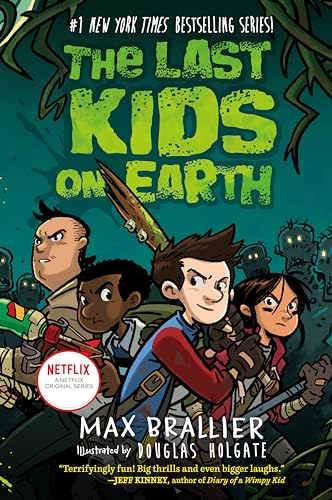
The popular series The Last Kids on Earth by Max Brallier and Douglas Holgate, for example, plunges young readers into a world overrun by monsters after a zombie apocalypse. While geared towards a younger audience, it masterfully blends humor with themes of survival, friendship, and adapting to a drastically altered world—classic elements of science fiction, even if presented in a more accessible, action-packed format. It proves that the genre's core appeal—imagining the future and coping with the unknown—has universal resonance.
Why These Books Matter
The essential science fiction books, whether high-minded philosophical treatises or adventurous tales, all share a common thread: they make us think. They challenge our assumptions, spark our curiosity, and provide a framework for understanding our past, present, and potential futures. They are not just stories; they are thought experiments, social commentaries, and blueprints for worlds both wondrous and terrifying.
From the ethical dilemmas of creation to the complexities of intergalactic governance, these narratives have not only entertained but have also inspired scientific advancements, influenced political discourse, and provided comfort and understanding in times of rapid change. So, whether you're a seasoned sci-fi veteran or just dipping your toes into speculative fiction, picking up one of these essential reads is a journey well worth taking. What are your favorite essential sci-fi books? Let us know in the comments below!