ASOIAF's Bloated Myth: Why George R.R. Martin's Epic Is Overrated
Everyone raves about Westeros, but Lit-Pop says the 'Song of Ice and Fire' saga is a monument to unfulfilled potential, not genius. It's time to read something *finished*.
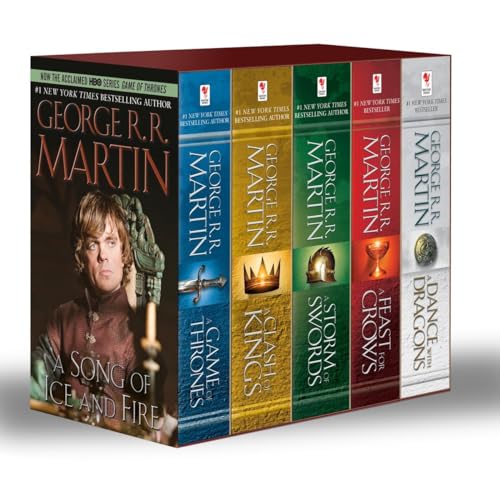
It's March 27, 2026, and once again, social media feeds, literary forums, and even casual water cooler chats are buzzing about A Song of Ice and Fire. "It redefined fantasy!" they cry. "The intricate plotting! The morally grey characters!" And yes, for a time, George R.R. Martin's sprawling saga truly felt like a seismic shift in the genre. But let's be blunt: the emperor has no clothes, and the 'song' has gone on so long, it's become a monotonous drone. The widespread adoration for ASOIAF, particularly in its unfinished state, is one of the greatest literary misapprehensions of our time. It's less an epic masterpiece and more a cautionary tale about unchecked ambition and narrative bloat.
Why the ASOIAF Hype Rings Hollow
For those wondering if the endless wait for The Winds of Winter is worth it, or if A Dance with Dragons really lived up to its promise, here’s why the 'A Song of Ice and Fire' saga, despite its initial brilliance, ultimately falls short:
- Narrative Bloat & Pacing Issues: The series became a victim of its own success, expanding beyond manageability.
- Unfulfilled Potential: Its unfinished state fundamentally undermines its claim to epic greatness.
- Diminished Returns: Later books struggled to recapture the early magic, descending into tedious tangents.
- The Illusion of Depth: Complex, yes, but often at the expense of coherent, propulsive storytelling.
The Epic That Ate Itself

Let’s acknowledge the undeniable: A Game of Thrones, A Clash of Kings, and even A Storm of Swords were groundbreaking. Martin ripped up the fantasy rulebook, delivering a gritty, unpredictable world where no character was safe and political machinations were as deadly as dragons. The initial thrill of its subversion, the intricate world-building, and the shockingly brutal plot twists hooked millions. We saw a new paradigm for epic fantasy, one that refused to shy away from moral ambiguity or grim realities. This was the era of undeniable genius, setting a new benchmark for what a fantasy series could achieve.
But then, something happened. Somewhere around A Feast for Crows and A Dance with Dragons, the narrative began to buckle under its own weight. The introduction of countless new POV characters, many of whom served little purpose beyond showcasing the sheer scale of Westeros, diluted the compelling core storylines. We spent pages, sometimes chapters, following characters on seemingly endless, inconsequential detours. The famous 'Meereenese Knot' is a perfect example of a writer getting so lost in his own intricate web that the plot effectively grinds to a halt. This isn't intricate world-building; it's narrative paralysis. For more on cutting through the noise, check out our piece on Beyond the Hype: Ranking This Week's Trending Books.
The Unwritten End: A Fatal Flaw
Here’s the rub: how can a series be hailed as an all-time classic when it remains fundamentally unfinished? The narrative threads, meticulously woven over thousands of pages, are left dangling. The promises made to the reader – the grand conclusions, the ultimate fates – are yet to be delivered, and with each passing year, the likelihood dwindles. An epic's true power lies not just in its journey, but in its destination. Without a cohesive, satisfying conclusion, the entire edifice feels like a half-built cathedral – impressive in its scope, but ultimately incomplete and unfulfilling. It transforms from a dynamic story into a literary white whale, chased by readers and author alike, with no land in sight. This isn't just a delay; it's a profound structural failure that recontextualizes the entire reading experience. Why invest so heavily in a world that might never see its final dawn?
Editor's Verdict
Rating: 6/10
'A Song of Ice and Fire' began as a groundbreaking force but devolved into an unwieldy, ultimately unfinished epic. Its initial brilliance is overshadowed by severe pacing issues and the lingering question of resolution.
Ditch the Bloat, Embrace Completion: Your Real Literary Fix
So, if you're tired of waiting for dragons that may never fly or plots that perpetually stall, what should you read instead? For a truly satisfying, completed story that delivers on its premise, look no further than The Dead Guy Next Door by Lucy Score.

Score’s novel offers a refreshing antidote to the sprawling, unfinished sagas that plague the trending lists. It’s witty, engaging, and most importantly, it's a finished story. You get a compelling plot, characters you can genuinely root for, and a narrative that moves with purpose towards a satisfying conclusion. No waiting decades for the next installment, no getting lost in superfluous subplots. It delivers exactly what it promises – an entertaining mystery with a touch of romance – proving that a well-executed, completed narrative, even if it's not an 'epic,' provides far more literary satisfaction than an endlessly expanding, perpetually deferred magnum opus. Don't let the algorithm dictate your reading; sometimes, the best reads are the ones that actually come to an end. It's time to Ditch Cozy for Chaos: Your Real Reading Slump Cure and pick up a book that respects your time and delivers a complete experience. Like this post if you agree that a completed story beats a never-ending saga!
FAQ
Why is 'A Song of Ice and Fire' considered unfinished?
Only five of the planned seven novels in the series have been published by George R.R. Martin. The sixth book, 'The Winds of Winter,' has been in progress for over a decade, and the seventh, 'A Dream of Spring,' is also unreleased.
What does 'narrative bloat' mean in the context of ASOIAF?
Narrative bloat refers to an excessive expansion of the storyline, characters, and subplots, particularly in the later books ('A Feast for Crows' and 'A Dance with Dragons'), which led to a slower pace and tangents that many readers found detracted from the main plot.
Is 'The Dead Guy Next Door' a standalone novel?
Yes, 'The Dead Guy Next Door' by Lucy Score is a standalone romantic comedy mystery, offering a complete story without requiring readers to commit to a lengthy series.